Your Outside Faucet Lives Inside Your Wall
Why a cheap washer, changed on time, saves you from cutting into the house
How a Frost-Free Hose Bib Works
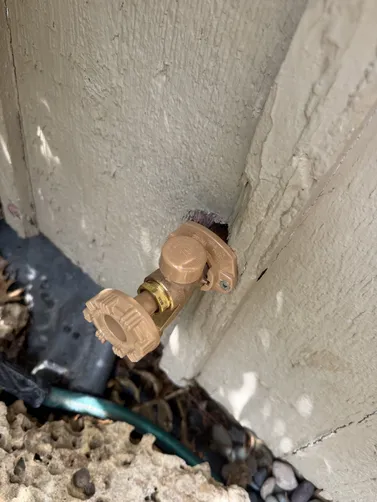
A frost-free hose bib (outside faucet) looks small from the outside, but it's really a long tube that runs through your wall. The part that actually shuts the water off isn't at the handle... it's at the far end of that tube, inside the warm part of the house.
That's the whole trick. The water stops inside where it can't freeze, and the tube drains out when you shut it off. At the very end of the stem is a small rubber washer that presses against a brass seat. That washer is the only thing standing between you and a drip.
Watch What Happens Over Time
Tap a step to see it up close.
A frost-free hose bib, cut in half
Up close at the seat
Seals cleanA new washer seals clean
The rubber washer on the end of the stem squeezes against the brass seat and the water stops cold. When you shut it off, the tube drains dry... so there's nothing left in the wall to freeze.
That's why a Wise Maintenance Plan puts a new washer in every outside faucet, every year... before it ever gets to metal on metal.
- Rubber washer
- Metal plunger
- Brass seat
- Water
Metal on Metal Is What We're Trying to Avoid
Rubber washers wear out. They get hard, they crack, and they get thinner every time the faucet is opened and closed. When it starts to drip, most people do the natural thing... they crank the handle harder. That just grinds the washer away faster.
Once the washer is gone, the metal plunger it's mounted on hits the brass seat directly. Every time the faucet is shut off, metal grinds into brass. It doesn't take long before the seat is scored and nothing will seal it again... not even a new washer.
On most frost-free hose bibs the seat can't be replaced. So now it isn't a washer anymore. It's a whole new hose bib.
Why That Gets Expensive
The connection for a frost-free hose bib is inside the wall, usually a foot or more in. Sometimes we can get to it from a basement or a closet. A lot of times we can't.
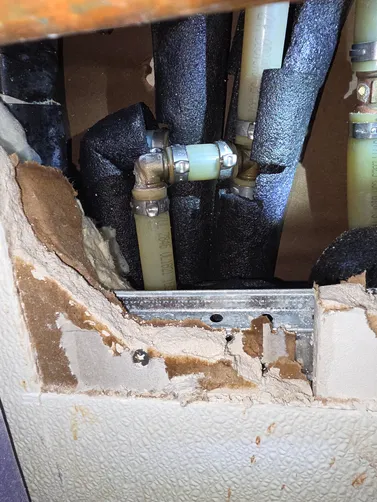
When there's no access, replacing it can mean opening up drywall, cutting brick or siding, and in some houses saw cutting. Then there's patching and painting on top of the plumbing. All of that for a part that could've been saved with a washer.
One Winter Rule: Take the Hose Off
"Frost-free" only works if the tube can drain. If a hose is left hooked up, it holds water in the tube, and that water freezes right inside your wall. The pipe splits where you can't see it, and you usually find out the first time you turn it on in the spring... from the inside of the house. Unhook your hoses before the first freeze.
How a Wise Maintenance Plan Handles It
- A new washer in every outside faucet, every year, before it wears down to metal.
- We cap the faucet and open it up to check the packing nut for leaks.
- We open and close it and make sure it shuts off clean.
- We replace the packing seal if it needs it.
One note: older hose bibs that aren't frost-free can't be covered by the plan. Those freeze no matter how well they're maintained. If yours isn't frost-free, we'll let you know on the first visit.
Written by
Matthew Wise
Owner, Wise Plumbing
Serving Tulsa and the surrounding area — Broken Arrow, Owasso, Bixby, Jenks, and Sand Springs.
Licensed • Insured • Bonded