Tank vs. Tankless
Yes, the details matter.
When it’s time to replace a water heater in Tulsa, the big question on most peoples mind is stick with a traditional tank or go tankless?
There’s no single right answer. It depends on the house, the family, and what you actually care about. Natural gas in Tulsa is some of the cheapest in the country, so the pure energy-savings argument for tankless is weaker here than it is in high-cost areas. That doesn’t make tankless a bad idea — it just means you should choose it for the right reasons.
A Quiet Advantage We Have in Tulsa
Tulsa sits in climate Zone 3A So while our winters get cold. Luckily, they don't last forever. So as a result. Tulsa's typical water main temperature only gets down to the high 50s like 58 ish.
Thankless water heaters work on temperature rise, which is called Delta T. Which means. The warmer the water coming into the unit. The less work it has to do in order to reach your desired setpoint. So in other words. If you have an ambient temperature coming in at 58° and your desired temperature is 115, Your required temperature rise is only 57°. That difference is smaller than in places like New York, where water temperatures can drop down to 35° - 45°. That means higher flow rates and more fixtures supported per heater. In practical terms, a Navien that might be borderline for simultaneous showers in Minnesota can handle a full house here without breaking a sweat. That’s a real, under-appreciated benefit of living in Tulsa. And it still gets cold enough that you appreciate the endless hot water when you turn it on.
When Tankless Makes Sense
Tankless shines when you want the luxury of never running out of hot water. Imagine running two showers and the washing machine while someone still uses the kitchen sink — all at the same time, with no drop in water temperature. That’s the real benefit: continuous hot water on demand, even when the whole house needs it.
That’s exactly why we stand fully behind the Navien NPE-240S2. We’ve designed products around this unit because it’s that good. There are other tankless units on the market we simply won’t install — some brands we wouldn’t put in our own house.
A few important notes if you’re considering tankless:
- There are still local utility rebates available (Oklahoma Natural Gas and others often have programs in the $250–$350 range depending on the situation), but don’t expect the unit to “pay for itself” purely on energy. Do it because you want the performance.
- Modern recirculation pumps (like the Grundfos Alpha series) can finally be controlled and scheduled from your phone. The old ones were a pain and usually just sat there unused. These actually get used.
Tankless units are more efficient, so you will use less gas and produce fewer emissions. That’s a real upside, even with cheap Tulsa gas.
When a Traditional Tank Still Makes Sense
If you already have a recirculation system, switching to tankless may provide only modest gas savings because the system will continue using energy to keep hot water circulating. In that situation, tankless makes the most sense when you value the continuous-hot-water experience and stronger performance during periods of high demand. If your primary goal is saving money while maintaining your recirculation system, a traditional tank water heater will likely be better aligned with your financial goals.
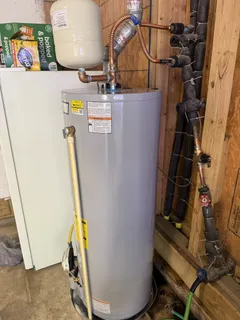
For a lot of households, a good tank water heater is still the practical choice. It does exactly what most people need: enough hot water for normal simultaneous use without the higher upfront cost of tankless.
Two brands we stand behind for tank units are AO Smith and Bradford White. Both have solid track records for longevity when installed and maintained correctly.
One headache with tanks right now: federal efficiency rules have made them physically larger. A 40-gallon that used to fit fine may no longer fit in the same closet when it comes time to replace it. We’ve seen this more and more. Sometimes the only realistic option becomes a different location or going tankless.
Installation Matters More Than the Brand
Tankless installations are more involved across the board. They require proper condensate management, and converting from a traditional tank usually means replacing and rerouting the existing single vent with separate intake and exhaust piping made from entirely different materials. Tankless units also have higher gas demands, so the gas load and piping capacity need to be calculated carefully. If the existing system cannot support the demand and that is not identified early, the project can become expensive very quickly.
A few non-negotiables:
- Location — We generally recommend against attic installs. It’s not always strictly prohibited by code if you meet access, pan, and clearance requirements, but it’s harder to service and more vulnerable to freezing. Keep it out of spaces that can freeze.
- Power — These units need electricity to run the computer board (the Navien NPE-240S2 draws a maximum of about 200 watts without an external pump). Power outages will shut them down. A small backup battery system can keep one running for several hours — something we’re looking at offering.
- Condensate — High-efficiency units condense moisture in the exhaust. That condensate is mildly acidic. If you have older cast-iron drains, you need a neutralizer and it has to be maintained. Skip that step and it can eat your drain lines over time. Interior re-pipes start in the mid-teens these days and only go up.
- Cascading — For larger homes, two Navien units can be linked so they communicate and share the load. One unit can stage on and off as needed. Done right, these systems can last a very long time under normal residential use.
The Bottom Line for Tulsa Homes
- Want continuous hot water with no compromise? Go Navien tankless (and do the install correctly). Our milder groundwater temperatures give these units a real performance edge here.
- Want reliable, lower-cost hot water that covers normal family use? A quality AO Smith or Bradford White tank is still an excellent choice.
- Either way, installation quality matters more than almost anything else.
We’re happy to look at your specific situation — gas line size, existing venting, location, water usage patterns — and tell you straight what actually makes sense for your house. No pressure, no sales pitch. Just the right tool for the job.